Showing posts with label character. Show all posts

Monday, March 19, 2012

Monday Musings: Writing with Purpose

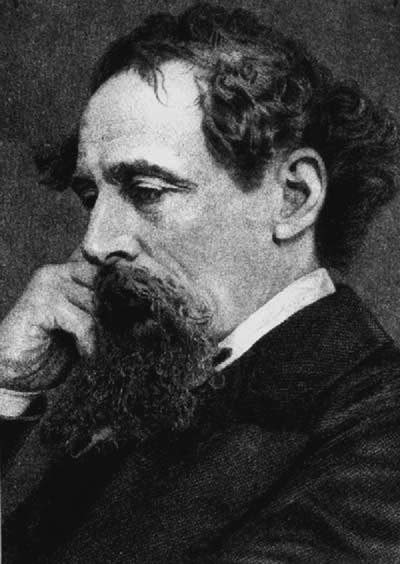
Charles Dickens
One of my favorite authors is Charles Dickens. In his life outside of writing, he was a man of deep thought and contemplation. He placed much value on the comprehension of the current events in which he lived.

Although most remembered today for A Christmas Carol, or Oliver Twist, Dickens wrote a much more indepth novel, that many scholars today view as the veiled autobiography of the author, David Copperfield.

Dickens's stories were written with purpose. He used his own life experiences as fodder for story settings, character relationships, and plot development. He had a phenomenal, nearly photographic, memory of people and places that had passed through his life. This is considered a rare trait among authors.

Every story Dickens ever wrote had a purpose. He was one of the few authors of his time who did not fear the retributions of the gentry, or powers that be, in making his point. He was lauded by authors such as Orwell, Tolstoy, and Chesterton for his ability to present realism. The underlying themes of his works were the very events directly effecting the people of the time. His favorites seemed to be: greed and the deplorable treatment of the impoverished in London. It was this realism that captured the hearts and minds of his readers, and caused authors, such as Henry James and Virginia Woolf, to all but despise him as an author, and a man. They considered his works to be melodramatic, overly sentimental, and most assuredly implausible.

Dickens was not what would be considered a well-educated man of the time. He was forced to drop out of school to help the family rectify the financial woes in which they found themselves. Like David Copperfield, Dickens was forced to work long hours in a blacking warehouse. His father, mother and eleven brothers and sisters were taken to a debtor's prison.

One benefit of life Dickens possessed was the ability to read and write. He was an avid reader from a young age, which gave him an expansive vocabulary; something every author must possess. Although his life was a struggle from the beginning, Dickens identified and used his strengths to improve his situation.

Today, two hundred years after his birth, Dickens  is still one of the most beloved, and read, of the English authors. The reasons are as many as the readers who love his works. Scholars believe the reason is Charles Dickens wrote with purpose; a purpose that elevated the ideals of humanity, which still live on today in the hearts and minds of readers world-wide. His novels present life as it is, as it should be, or could be; but most importantly shine as a beacon of hope in the darkest days of our history.

It is my belief that the most successful writers, in any genre, are those who write with a purpose. Every word, sentence, and paragraph carefully crafted to convey some meaning, or thought provoking idea. Writing with purpose takes courage, time, patience, and most assuredly practice.

Are you writing with purpose?

Friday, April 29, 2011

Character Assassination

Character assassination - a topic nobody likes to talk about, but a very necessary act sometimes. Those of us who write novels oftentimes find ourselves in the awkward position of playing the role of an assassin.
No matter in what person we choose to write, we, as the author, have the omnipotent knowledge of everything that has happened in the past, is happening in the present, and will happen in the future. There are characters that live in our stories that we dearly love and then there are those who are integral pieces of the story, yet they are only destined to one end; an assassination orchestrated by their creator. 
This is the difference between human beings and diety when it comes to creation. Mercy for a fictional character is not relevant when it comes to the end of the story. We are willing to 'off' our characters at a whim, just because we want to; or sometimes it's a case of needing to for furtherment of the story.
I, as a reader, have found myself deeply disturbed or even horrified at the author assassination of some characters in the books that I have read.  Somehow, I will have developed a relationship of connection with each character in a story and find myself emotionally affected by the death of a one of these characters. This happened while reading one of Marion Zimmer Bradley's books in "The Mists of Avalon" series. I won't say which book because I don't believe in spoilers.
As I continue to write "The Malakai Chronicles", I keep in mind the reader's connection to characters and I am being very conscious of how eliminating any one of them may affect a reader. The characters in "The Malakai Chronicles" are rich with a lot of thought in their creation.

Are we Gods / Goddesses in our title of author? No, not really. We are creating ficitional stories; a reality that only exists in the imagination of the reader. How we respect the readers' emotional connection to their own imagination is the real test of character assassination.
I am excited and looking forward to summer of 2011 when "The Malakai Chronicles" is scheduled for public release.

Saturday, August 28, 2010

The Realism of Characters

I am the analytical reader and writer. Everything I read is thoroughly analyzed for realism. With that said, it should be a given that everything I write is also analyzed for realism.

I'm often questioned by young people, who are also aspiring to be authors, why can't characters just be whatever you want them to be or do whatever you want them to. The answer is quite simple - if the character is not believable then the story is not believable. If the story is not believable it will not sell. Today, although many readers are reading for escapism, they still require a certain degree of realism in order to be able to relate to the characters and the events that occur in the story.

My first finished full-length novel, "Sticks and Bones" is written with a stark dose of realism to drive home a point to young people. I won't give a story spoiler here, but in order to write for young people they need to be able to see themselves in the story. Not always as they are in their own real life, but even as they might be in a fantasy story. "Sticks and Bones", a mystery crime thriller for young adults, required a certain amount of realism regarding high school students of today and why they do what they do in order to spark the interest of young people.

It was a fascinating adventure spanning four years immersed in the world of high school students of today so that I could demonstrate that realism in the book. This, in itself, is a testament to why characters can't just be what you want them to be. In this particular case they had to be as real as the reader and the friends of the reader. The characters of the book and their worlds are easily identified in the lives of the readers. A young adult will be able to say, "That sounds just like so-and-so," a person well-known to themselves. At the same time, I had to create adult characters that were just as realistic as the high school students of the story. If I had not created these realistic characters neither adults or young adults would understand the crime and why it occured thus diminishing the point of the book.

"Sticks and Bones" has yet to be published, however, I am hopeful that it will be picked up by a traditional publishing house and disseminated across the world. As arrogant as it might sound, I feel that the message carried in this book will send it soaring to the top of the readers lists all around the world.

The novel I am currently working on, "The Ten Thousand Hands Project" will astound even the most critical or skeptical reader. It is a work of fiction that has a very real place in the world in which we live. It will cause readers the world over to take pause and question what they honestly believe to be true in the world and what they don't. Why? Because of the realistic nature of the characters. Building characters is difficult. Characters require knowing everything about them - what they like or don't like and why they do or don't like those things; what are their physical attributes as well as their psychological attributes and how do each of these connect with the world in which they live - a world that must be created by the author with just as much realism as the characters themselves.

"The Ten Thousand Hands Project" is the prequel to the series, "The Malakai Chronicles". There are fantasy books, books on the occult, books based on religious history - but there are few books out there that touch the subject matter in "The Ten Thousand Hands Project" or "The Malakai Chronicles". I am hopeful for publication with this series as well and know that it will take the reader world by storm.