Showing posts with label Charles Dickens. Show all posts

Sunday, February 21, 2016

Web of Obsession

Great Expectations is one of the most epic stories of love and loss of all time. There is a reason this book is a classic. It speaks to many of the human conditions, as is the nature of Charles Dickens in his works. We are going to peer in on Pip and Estella, a love that was as one sided as love can be, until one day…

In Great Expectations, Pip finds himself falling deeply in love with a girl he cannot possibly hope to marry, although he would dearly love to. He begins to tell himself stories of how Miss Havisham has planned it all out. He begins to believe that somehow the woman has orchestrated this very complex plan to ensure that Estella will be his. Oh what a web we weave, when we practice to deceive – especially ourselves.

Great Expectations is a cautionary tale about self-deception based on assumption. Pip, receiving a mysterious gift of wealth, assumes that the wealth came from Miss Havisham to assure that he was of the right class to marry Estella. What he didn’t consider is that although the world divides humanity, true love will transcend all obstacles.

We as human beings do this all the time. We want something [insert thing here] so badly that we begin to tell ourselves stories. We rehearse the lines for conversations that may never happen. We create scenarios in our head of all the possibilities. We choose the one that makes the most sense to us and build upon it, and one day we find we have fallen deep into obsession.

Pip is obsessed with Estella. He can’t live a single day without the story he has created ruling his life. Until the day he learns the mysterious gift of wealth did not come from Miss Havisham at all. This one intricate piece of knowledge unravels the story in his mind, leaving him disappointed, heartbroken and in a state of disbelief.

There are no greater lies than the lies we choose to tell ourselves. Think about it. The deepest disappointment that comes to each of us is self-made, through the stories we tell ourselves. Obsession is blinding to all things real.

Be careful about how much you fall in love with someone or something. You may just find yourself caught in the web of lies you tell yourself.

Through literature we learn to live, to love and to conquer!

Monday, December 24, 2012

Merry Christmas from Butterfly Phoenix

Frank Finlay as Marley Source Wikipedia

“Business! Mankind was my business. The common welfare was my business; charity, mercy, forbearance, and benevolence, were all my business. The dealings of my trade were but a drop of water in the comprehensive ocean of my business!” ~ Jacob Marley, 
from A Christmas Carol by Charles Dickens

Oh the words of that infamous ghost of Jacob Marley, ringing truth still on Christmas Eve 2012.


So many times we forget that Ignorance and Want applies to more than just human necessities such as the ability to read and write, or the common needs of food, shelter, and water. Ignorance and Want are clamoring to be alleviated of their thirst at the capped wells of spiritual wholeness.

This isn’t about how long are our individual chains in the great hereafter. It’s about what we are doing in the great here-right-now.

Are we reaching out to those who need reaching out to? If you have a guest in your house do you not say, “Welcome to my home,” or do you first wait for them to say, “Oh thank you, thank you so much for letting me come to your home?” If you wait for the gratitude, you might be waiting an awful long time. Most likely your guest list will dwindle to zero based on, what I’m certain at the very least Miss Manners would consider, gauche behavior on your part. I’m pretty sure that God would like us to use our manners on his behalf as well.

Let’s say you have a friend whom you haven’t seen in quite a while. Do you wait for them to contact you, or do you contact them to find out the reason you haven’t seen them? If you wait for the desperate pleas for your friendship you might find yourself waiting for quite a long time. Perhaps they were waiting to see if you actually cared enough to call. I’m pretty sure that although God checks in on our friends, he’d like us to do the same on his behalf.

If you have a friend who is living through hell, do you stand by and watch? Or, do you say, “How can I help?” Perhaps you can’t help at all. Maybe the situation is so bad, so unbelievably heartbreaking, it is beyond your ability to help, but is it not better to ask than not ask? What if you could have helped and chose not to? (Think Tiny Tim) I’m pretty sure that God always asks.

It’s kind of surreal to watch people become demoralized. We never think that person will be us, but sometimes it is. When demoralization happens, the first reaction on the part of the demoralized is to seek hope. What happens when the light of hope has been willfully turned out? When the common welfare of mankind is no longer the business of those entrusted with the light of hope? When the business of hope is nothing more than a money changer’s table?

In the words of the Christmas carol, I Heard the Bells on Christmas Day, written by Longfellow, God is not dead, nor does he sleep. That is a certainty to those who hold to the Christian belief, at least that’s the way I understand it. I think it’s time we start acting like it – individually and in groups.

A Christmas Carol by Charles Dickens holds so many lessons of life within its pages. Did you know that Dickens wrote this infamous timeless classic in six weeks? How can that happen? How can such a profound story of the human condition be written so fantastically, so perfectly in six weeks? Perhaps…just perhaps, there was something more. Something that the world needed to hear and Charles, bless his soul, was good enough to share it.

Have a Merry Christmas one and all. May your business always be the common welfare of mankind.

Monday, October 1, 2012

Monday Musings: The Imaginers

Writing is a magical and extraordinary process. It allows a person the opportunity to open a door to places of infinite wonder, the door to the imagination. In the world of today, we have countless individuals who are doing our imagining for us. However, what if…just what if there were no more imaginers in the world? Would we be stuck watching the same old TV shows, videos, or movies for the rest of our lives?

There is many a young person who will say things like, “literature is boring.” BORING? Never! Literature is a gateway to so many other things: Scientific discoveries unimagined. I wonder if Ray Bradbury found literature to be boring; Romantic interludes of untold proportions. I wonder if Margaret Mitchell found literature to be boring; Social dramas that boggle the average man’s mind. I wonder if Charles Dickens found literature to be boring.
I remember in fourth grade music class we listened to Jules Verne’s epic story, Twenty Thousand Leagues Under the Sea. In the class we were to appreciate the symphonic background music in the telling of the story. However, I was listening to the story and I could imagine just how mysterious Captain Nemo really was. I could imagine everything about him, the way he looked, how he smelled, how his voice resonated, there was nothing and everything that was left to the imagination. He was a 19th century Robin Hood, a super hero of the time fighting against imperialism and oppression everywhere. He was a villain and a hero. He was whichever you decided him to be. I suspect there were twenty-eight versions of Captain Nemo in that fourth grade music room. Years later I saw the movie. I was decidedly disappointed that the Captain looked nothing like I had imagined, the Nautilus wasn’t at all the way I pictured it in my mind. And the whole story just wasn’t the same.

That’s the problem with many books that are turned into movies; it’s just not the same. I heard the unrelenting lamentations from my daughters regarding how different the Harry Potter movies were from the books, or how the Twilight books were so much better, and most recently how The Hunger Games left out too many important details in the movie. I dare say, when Shades of Gray comes out in the movie format there will be many a disappointed woman in the world. I never read the books and can safely say that I won’t. I have my limits on what I find acceptable and what I don’t. ‘Shades’ just doesn’t fall within those parameters.
In recent years we have had some pretty stellar stories (in the eye of the beholder of course), yet the movie adaptations just seem to fall short. What does that say about the human imagination? Once it’s fed, it has an insatiable need to be fed forever. We like things to be the way we envision them, and oftentimes find ourselves in discontent over the other guy’s version.

Once the door to imagination is open, I dare say it can never be closed. The future of the world depends on imagination, and that my friends, is where literature plays a significant role. After the games of pretend from childhood end, where does one find the fantasy of life? It’s found in literature.

Go ahead! Take a chance. Open a book and see where the story leads you. You have nothing to lose. Get your imagination on!

Monday Musings: Are you an imaginer too?

Monday, March 19, 2012

Monday Musings: Writing with Purpose

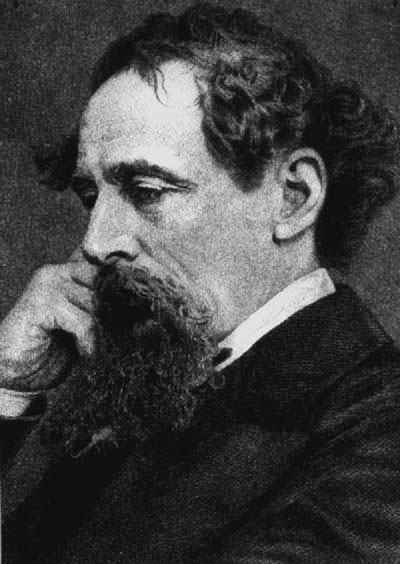
Charles Dickens
One of my favorite authors is Charles Dickens. In his life outside of writing, he was a man of deep thought and contemplation. He placed much value on the comprehension of the current events in which he lived.

Although most remembered today for A Christmas Carol, or Oliver Twist, Dickens wrote a much more indepth novel, that many scholars today view as the veiled autobiography of the author, David Copperfield.

Dickens's stories were written with purpose. He used his own life experiences as fodder for story settings, character relationships, and plot development. He had a phenomenal, nearly photographic, memory of people and places that had passed through his life. This is considered a rare trait among authors.

Every story Dickens ever wrote had a purpose. He was one of the few authors of his time who did not fear the retributions of the gentry, or powers that be, in making his point. He was lauded by authors such as Orwell, Tolstoy, and Chesterton for his ability to present realism. The underlying themes of his works were the very events directly effecting the people of the time. His favorites seemed to be: greed and the deplorable treatment of the impoverished in London. It was this realism that captured the hearts and minds of his readers, and caused authors, such as Henry James and Virginia Woolf, to all but despise him as an author, and a man. They considered his works to be melodramatic, overly sentimental, and most assuredly implausible.

Dickens was not what would be considered a well-educated man of the time. He was forced to drop out of school to help the family rectify the financial woes in which they found themselves. Like David Copperfield, Dickens was forced to work long hours in a blacking warehouse. His father, mother and eleven brothers and sisters were taken to a debtor's prison.

One benefit of life Dickens possessed was the ability to read and write. He was an avid reader from a young age, which gave him an expansive vocabulary; something every author must possess. Although his life was a struggle from the beginning, Dickens identified and used his strengths to improve his situation.

Today, two hundred years after his birth, Dickens  is still one of the most beloved, and read, of the English authors. The reasons are as many as the readers who love his works. Scholars believe the reason is Charles Dickens wrote with purpose; a purpose that elevated the ideals of humanity, which still live on today in the hearts and minds of readers world-wide. His novels present life as it is, as it should be, or could be; but most importantly shine as a beacon of hope in the darkest days of our history.

It is my belief that the most successful writers, in any genre, are those who write with a purpose. Every word, sentence, and paragraph carefully crafted to convey some meaning, or thought provoking idea. Writing with purpose takes courage, time, patience, and most assuredly practice.

Are you writing with purpose?