Friday, March 30, 2012

Simply Saturday: The Powers that Be


I have been working hard on 'The Chrysalis Series' these past weeks; traveling to and from the Butterfly Fields, creating two worlds that exist simultaneously. Creating two worlds that collide every day for many of us. The worlds of good and evil.

Living in the world today is akin to living in the devil's kingdom. It is easy for us to see all the power and might of the evil forces that seem to rule the day. Seem to... Sometimes it is easy for us to fall under the illusions of the evil, accepting them as nothing more than the coolest, newest fad that will allow us to take control of our lives in an unrelenting, unyielding world that always desires to consume us to our very core. To the dismay of many, there are no werewolves, vampires, fairies, or the like in 'The Chrysalis Series'. It is a different sort of fantasy series. It is the type of fantasy that delves into the realities of the powers that be: Good and Evil. It is a battle to the end; from the canyons carved by the great river, through the Butterfly Fields, and straight into the village of Johnsport.
The story follows a young commoner, Elsie McCormick, and her sister, Annalicia, as they struggle to find the thing that will save them both from the autrocities propogated by the inhabitants of Johnsport. Two cultures surviving together; yet separately.

The McCormicks bear the burden of Annalicia's condition. A condition that could bring complete annihilation upon the village of Johnsport and the world. A condition she inherited from her father, Neville, a hideous, violent man - an outsider. 

Elsie's only wish and desire, to learn all the things the world has to offer, is the very desire that will send her down a dark and insiduous path, which only leads back to The Butterfly Fields; to Johnsport. Elsie bears the scars and markings inflicted by the villagers. She is not a warrior, her only strength lies in the confines of her mind.

Sometimes our deepest prayers are answered. Sometimes the answer isn't what we thought it was; or from the source we think it is. 'The Chrysalis Series' a journey through illusion, infatuation, manipulation, and into the battlegrounds of Good and Evil; a battleground where mere humans possess more power and might than any foe.

Coming soon...

'The Chrysalis Series' - Book One: The Butterfly Fields

Monday, March 26, 2012

Monday Musings: The Glass Menagerie

I first discovered The Glass Menagerie, a play by Tennesee Williams, when I was a junior in high school. I was immediately fascinated with all of the characters and their complexities.

The symbolism used in this play is so intricately imbedded into each character and prop, the viewer - or reader - can relate on a very deep, personal level.

I found the character of Laura the most intriguing of all, symbolizing an entire sect of population during the 1930s. That being the section of the population that could not, or perhaps did not want to, relate to the reality of the outside world as it was - cruel, judgemental, and painful. Or, perhaps even a sub-section of the population of the time - those who were imperfect.

I found it fascinating how Laura identifies herself with the glass unicorn in her menagerie of animals. It is unique; somehow different than the rest, and yet still part of the menagerie. Laura views herself as unique - due to her imperfection - and yet a part of the population; albeit she was an introverted recluse. She is terrified of the world in which she finds herself; learning early on the cruelties of the world towards those who are, in one way or another, different - imperfect.

A profound statement in the play, made by Laura, comes when Jim, the long awaited suitor, bumps the table of glass animals, the unicorn falling on the floor, its horn breaking off. "Now it is just like the rest of the horses. " It is no longer unique, or different, just one of the many. If Laura were to be suddenly changed, both legs of the same length, no longer terrified of the world, she too would be just like the rest; no longer unique. Ironically, it is her physical imperfection which causes the introverted recluse to become the reality.

Many viewers, and readers, of Williams' play identify with Laura's plight; regardless of whether the imperfections are visible, or intangible. None in this world are perfect. Each person being unique in their own ways. Each having their own histories, stories, tragedies, and triumphs culminating into their reality and perception of the world.

The Glass Menagerie, well written as a timeless classic that will never cease to define the human psyche, human nature, and the humanities.

Saturday, March 24, 2012

Simply Saturday: Because He was a Cat

Cats are interesting creatures. I've only ever owned one that I actually liked. The problem was he wasn't all that keen on me; or anyone else for that matter - simply because he was a cat.

Petey was an alley cat from the start, tragically left orphaned in an alley at just a couple weeks old, when his mother was run over by a garbage truck. True story as I live and breathe.

My sister and I rescued him and his brother from the Rehab Center. Again, true story. The employees of the center found the kittens, and long story short, my sister and I convinced our mother it was a good idea to allow us to bring them home. We fed them kitty formula with little eye droppers until they were big enough to drink out of a bowl.

Our mother told us, time and again, two tom cats will not live together, and true to her prediction, Petey ran off his own brother; leaving him King of the Castle. He reigned with an iron paw. He did not discriminate against any creature in the house; including the family dog. He hated everyone equally. Ok, maybe he disliked the dog a little more than the humans who fed him, and provided him with a warm place to sleep during the day.

He was a long-haired tuxedo cat; mixed breed. He ate anything put before him, except peas. He just didn't like them leaving them in the bowl for the dog to scrounge later. He was an alley cat more inclined to the tastes of, shall we call it, wild game, which he often attempted to bring home as a mid-day snack while the humans were away. Never once did he get his 'take out' past the front door.

He had a love affair of sorts with the beautiful, white, persian that lived in the neighbor's house. She would sun herself in the window, and he would lay on the tree branch outside talking to her. She escaped one day, a while later she had a litter of kittens that looked like Petey. Coincidence? I think not. She was shipped off to some far away place after that. Petey was never the same again.

He took to carousing the alleys at night, hanging out with a questionable lot of ne'er do well cats; eventually becoming the leader of the pride, or gang, or family...or whatever one would deem them. Sometimes he would be gone for days at a time, returning with unkempt fur, blurry eyes, and scratches he refused to devulge where they came from. I suspected he had also fallen into using catnip on a regular basis; but he hid it well if he did.

As he aged, he became a little grumpier, a little more selfish, and a lot more territorial with each passing year. He had his own chair - people sized. I'm pretty sure he thought it was his throne. If you dared to sit in his chair while he was home, he would not hesitate to jump in your lap, and plop himself down as though you weren't even there. Unless you were Grandma. He tried it once, and only once with her. Grandma disliked cats as much as Petey disliked her. She pushed him on the floor, and he just sat there with his back turned to her, his head hung down in defeat. Although, I am certain he plotted against her for many days after that.

Like a true alley cat, Petey just walked off into the sunset one night and never came back. He was thirteen years old in people years. I was away at college.

All in all, Petey was a good cat with lots of personality and character - even when he hated you; simply because he was a cat.

Monday, March 19, 2012

Monday Musings: Writing with Purpose

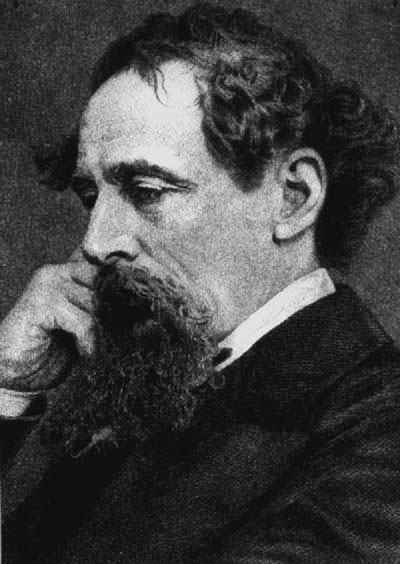
Charles Dickens
One of my favorite authors is Charles Dickens. In his life outside of writing, he was a man of deep thought and contemplation. He placed much value on the comprehension of the current events in which he lived.

Although most remembered today for A Christmas Carol, or Oliver Twist, Dickens wrote a much more indepth novel, that many scholars today view as the veiled autobiography of the author, David Copperfield.

Dickens's stories were written with purpose. He used his own life experiences as fodder for story settings, character relationships, and plot development. He had a phenomenal, nearly photographic, memory of people and places that had passed through his life. This is considered a rare trait among authors.

Every story Dickens ever wrote had a purpose. He was one of the few authors of his time who did not fear the retributions of the gentry, or powers that be, in making his point. He was lauded by authors such as Orwell, Tolstoy, and Chesterton for his ability to present realism. The underlying themes of his works were the very events directly effecting the people of the time. His favorites seemed to be: greed and the deplorable treatment of the impoverished in London. It was this realism that captured the hearts and minds of his readers, and caused authors, such as Henry James and Virginia Woolf, to all but despise him as an author, and a man. They considered his works to be melodramatic, overly sentimental, and most assuredly implausible.

Dickens was not what would be considered a well-educated man of the time. He was forced to drop out of school to help the family rectify the financial woes in which they found themselves. Like David Copperfield, Dickens was forced to work long hours in a blacking warehouse. His father, mother and eleven brothers and sisters were taken to a debtor's prison.

One benefit of life Dickens possessed was the ability to read and write. He was an avid reader from a young age, which gave him an expansive vocabulary; something every author must possess. Although his life was a struggle from the beginning, Dickens identified and used his strengths to improve his situation.

Today, two hundred years after his birth, Dickens  is still one of the most beloved, and read, of the English authors. The reasons are as many as the readers who love his works. Scholars believe the reason is Charles Dickens wrote with purpose; a purpose that elevated the ideals of humanity, which still live on today in the hearts and minds of readers world-wide. His novels present life as it is, as it should be, or could be; but most importantly shine as a beacon of hope in the darkest days of our history.

It is my belief that the most successful writers, in any genre, are those who write with a purpose. Every word, sentence, and paragraph carefully crafted to convey some meaning, or thought provoking idea. Writing with purpose takes courage, time, patience, and most assuredly practice.

Are you writing with purpose?

Friday, March 16, 2012

Simply Saturday: Loyalty, Friendship, and Love of the Irish Folk

A fine mornin' to ya, M'Lords and Ladies of the blogosphere! A special tip o' the hat to the na hÉireann! And what a fine St. Patty's mornin' it is in the little world known as the American Midwest!

Happy St. Patrick's Day!

I have written many a time about the strong Irish heritage in the family. Our little extension of the Jones Family descends from Fermanagh (Fear Manach), Ireland. Some say straight back to the Arch Bishop Thomas Jones, himself, who served at St. Patrick's in Ireland. I haven't made that direct connection, but to be sure, it could be true.

I am not going to go into the history of St. Patrick's Day. If you made it here, to the Butterfly Phoenix blog, you know your way around the net well enough to search it out, if you took a mind to.

We Irish, in my humble opinion, have been stereotyped long enough as the drunken, brawling type of folk.

The history of the na hÉireann (Irish) is steeped in religious beliefs from time immemorial; from the days when the Tuatha Dé Danann were considered the fifth settlers of the Island, to the Catholics, and the Protestants. Lewd and lucivious behavior was frowned upon immensely by the people of Ireland.

When an Irish woman was upset, it was generally due to some deviance of the code of behavior held by the people.

There were three things held near and dear to the folk: Loyalty, Friendship, and Love. We generally held to the mantra of Faith, Family, and Friends as well.

Loyalty: Loyalty to the tribe, clan, and family. All actions were to be for the benefit of the all. Treason, traitors, and the like were dealt with harshly; sometimes even killed for lack of loyalty.As time progressed the physical harshness faded, but the treatment as an outsider was / is probably worse.

Friendship: When befriending an Irishman, or Irishwoman, who valued honor more than life, the expectation of loyalty was a given. Your word given in friendship was as ironclad as a corporate contract is today. Irish folk did not generally take kindly to those who went about passing wrong for right, and right for wrong. Forgiveness was something that was practiced daily, but Irishfolk never forget a misdeed. When betrayed, they are done; the friendship is over. The name of the betrayer never to be uttered from the betrayed's lips again. Ne'er a foot to cross the threshhold of the house.

Love: Irishfolk love with all their heart.  But as the saying goes, never mistake their kindness for weakness. A true Irish person would give you the shirt off their back on a winter's day, but show lack of loyalty in any way, and they would not spit on you if you were on fire. Love is given freely, to be sure, but trust is always earned.


 Another tradition of the Irish is the honoring of the elders, and the deceased. Never disobey the elders, and never speak ill of the dead. Maybe I'll do a post around Halloween about the lore of speaking ill of the dead.

Today, I will honor the memory of Grandmother, a true Irish woman from beginning to end, who died this day, in 2003. The woman who shared many of the legends and lore of Ireland with me, and the family. The woman who lived as she hoped we all would follow; in the traditions and culture of our Irish family. One of her favorite songs was: When Irish Eyes are Smiling. A song that was reflected in her own Irish eyes all her days. Bhuel bhí cónaí, Seanmháthair. (Well lived, Grandmother.)

Until we meet again: Happy St. Patrick's Day. May the road always bring you home safely.

Tuesday, March 13, 2012

The Butterfly Circus

There are absolutely no words to describe the events that occur in this short film.
 Directed by Joshua Weigel!

The Butterfly Circus


Have a happy rest of your week!

Monday, March 12, 2012

Monday Musings: Comic Relief

The fascinating thing about language is the simple fact there are two languages that transcend any linguistic or other cultural barrier. These being laughter and music.

I'm not a humorist by any means, but I do enjoy reading things that are laugh out loud funny. My favorites are the surprising funnies that come completely unexpected. Neil Gaiman has done this for me several times in Neverwhere, American Gods, and The Anansi Boys. I found myself reading along and suddenly, without warning, in particularly intense moments, Mr. Gaiman will throw in a twist of comic relief right in the middle of it, leaving me giggling out loud.

The element of comic relief isn't limited to Mr. Gaiman, Betty Smith used it several times in A Tree Grows in Brooklyn, one of the most intense books I have ever read. Frank McCourt's, Angela's Ashes, required comic relief due to the tragic nature of the story. Both of these books had me crying and laughing in the same sitting.

Utilizing comic relief requires a certain finesse. The timing in the story has to be just right, or the 'funny' fizzles out and loses its punch. I think we have all experienced a book where the author seemed to have tried too hard to hit funny, and missed by a mile; or used it in the wrong context and morphed the effort into an epic fail.

I do not think authors intentionally try to work comic relief into their manuscripts. Somehow, I think it just happens, and it is just as surprising to the author as it is to the reader. In the end, it can be one of the most important elements of a story. If readers are left with something to smile about, remember for several days, or years, then the technique was well played.

Comic relief, something to think...laugh about.

Enjoy your day and smile; we all smile in the same language.

Monday, March 5, 2012

Monday Musings: Bullies and Mobsters


It is hard to believe it has been seven years since the first words of Sticks and Bones were typed onto the screen. It was a difficult journey of research and relationship building. There was a time when I did not think it was possible to finish the story; let alone one day publish it.

Since first publishing the novel in April of 2011, the topic of bullying has become popular in the mainstream media; and for good reason. Bullying is a hateful act that never seems to have a good ending.

Bullying awareness is something that needs to be kept at the forefront of everyone's mind. It is not just the bullying in middle and high schools, but into the colleges, and even the work place. I recently read a report that said bullying is becoming an epidemic in the United States. For reasons, not yet fully understood, we love to hate each other more than we ever have in our living history.

It used to be, hate at this magnitude was of a more generalized nature, now it seems to be on the personal, one-to-one level, where anyone can become a target at any time, for any reason. That is a pretty scary thought when we see what is happening in our country. Is it possible that one leads to the other?
In middle and high school we give it a childlike title: Bullying; in the work place we call it a more adult themed phenomenon called: Mobbing. The common thread in both is the results seem to be identical. The stress of long-term exposure to bullying, or mobbing, can have devestating effects on the victim. Some adults, who have been exposed to long-term mobbing (1 year or more), find themselves debilitated to the point of no longer being able to function in any working environment. A young person exposed to long-term bullying can, and often do, find themselves unable to function in any social, or educational, environment.

The two most unfortunate outcomes, but least acted upon, is 1.) revenge tactics such as school violence, or work place violence, and 2.) the taking of one's own life.  Both of which are generally carried out without warning.

While developing relationships with the young people involved in Sticks and Bones, I made a discovery of my own: bullying is learned behavior. We adults like to think the children are learning this from each other, but they aren't. They are learning it from the adults in their lives.

Most young children do not see the things we have deemed as the protected categories of life. If a child exhibits behavior of hating someone because they are gay, they didn't learn it all by themselves. It wasn't something they picked up on-line, or even in the video games they play; they learned it from an adult in their life. The same goes for race, national origin, familial status, economic status, disabilities, age etc. Hate is something that is learned. Disregard for human life is learned.

Some kids who bully never grow out of it. They carry their unchecked behavior into colleges, and sometimes become work place mobsters. The sad part of it all is kids don't just suddenly become haters. It is developed over years of exposure to adults practicing hate on a daily basis.

We, as a society, need to get our hate in check. Props to Lady Gaga, Ellen Degeneres, Oprah Winfrey, Dr. Phil, Tyra Banks and the myriad of other celebrities and well known people who make a point of saying, "Hate is NOT ok." It's not. It never will be.

Let's all try to treat each other with kindness, respect, and love. These three things make for a beautiful world. Let's try to focus on that; it sure beats the alternative.